



If your boiler has started making a noise that sounds like a whistling kettle or rumbling pan on the hob, you are probably dealing with what we call kettling. It is one of the most common issues we get asked about during routine boiler maintenance visits and it often catches people off guard.
Homeowners across Chessington, Epsom and Woking regularly tell us, “It’s working fine but it’s suddenly so noisy.” The good news is that kettling is usually fixable. The not so good news is that ignoring it can lead to bigger problems down the line.
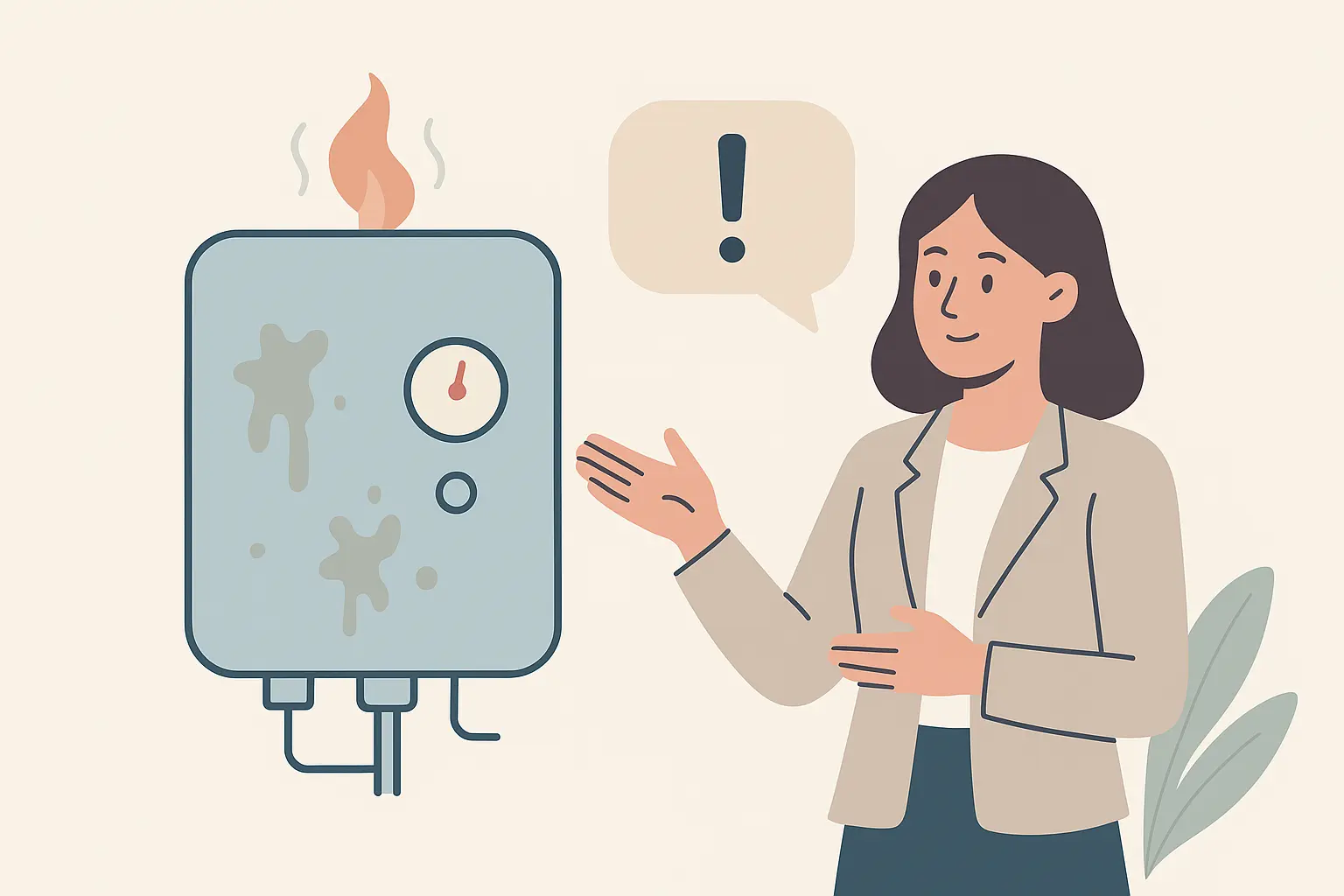
What Is Boiler Kettling?
Boiler kettling happens when limescale or sludge builds up inside the heat exchanger. That build-up restricts the flow of water through the boiler. As a result, the water overheats in certain spots and starts to produce steam bubbles.
Those bubbles collapse as they move into cooler areas, creating that distinctive whistling, banging or rumbling sound. It is called kettling because it sounds very similar to a kettle boiling on the kitchen worktop.
From the outside, your boiler may seem to be working as normal. You still have heating and hot water, but it is noisier than it used to be. Under the casing though, extra strain is being put on important components.
Common Causes of Boiler Kettling
In our experience working in homes across Surrey, there are a handful of usual suspects.
Limescale Build-Up
In hard water areas such as parts of Epsom and Chessington, limescale is a frequent issue. When water is heated repeatedly, minerals like calcium settle and cling to the heat exchanger. Over time, that layer thickens and restricts water flow.
Sludge in the System
Older systems especially tend to suffer from sludge. This is a mix of rust, dirt and debris that circulates through the radiators and pipework. If it collects in the boiler, it can block narrow waterways and cause hotspots.
Poor Water Flow
Kettling can also be linked to circulation problems. A faulty pump, partially closed valves or powerflushing issues can all reduce water movement. When water is not moving as it should, it overheats quickly.
Incorrect Boiler Settings
Sometimes we find the flow temperature set higher than necessary. Running a boiler too hot increases the risk of scaling and overheating. Modern systems with proper heating controls help keep temperatures balanced and efficient.
Warning Signs Your Boiler Is Kettling
The noise is usually the first giveaway, but there are other signs to watch for.
- Whistling or high-pitched noises when the heating is on
- Rumbling or banging from inside the boiler
- Radiators taking longer to heat up
- The boiler frequently switching itself off
- Higher gas bills without increased usage
We recently attended a property in Woking where the landlord thought tenants were exaggerating about a “noisy boiler”. It turned out the heat exchanger was heavily scaled and the boiler had started locking out. Catching it when the noise first started would have saved both hassle and cost.
How to Fix and Prevent Boiler Kettling
The right solution depends on the severity of the build-up and the age of the system.
Professional System Cleaning
If sludge is the problem, a chemical flush or powerflush can clear out debris from the radiators and pipework. This restores proper circulation and reduces strain on the boiler.
Descaling the Heat Exchanger
Where limescale is the main issue, an engineer can clean or in some cases replace the affected part. This is not a DIY job. Boilers need to be dismantled safely and checked thoroughly afterwards.
Install a Magnetic Filter
Magnetic filters are fitted to the system pipework and collect iron particles before they enter the boiler. We often recommend these for homes in Chessington and surrounding areas with older radiators.
Adjusting Settings and Controls
Lowering the flow temperature and ensuring your heating controls are properly set can reduce future scaling. Many homeowners are surprised how much more efficient their system becomes with a few simple adjustments.
Regular Servicing
The most effective way to prevent kettling is consistent servicing. During an annual visit we check for early signs of scale, test water quality and inspect internal components before damage develops.
If your boiler is over ten years old and repeatedly kettling, it might be worth considering an upgrade. Modern boilers are more resistant to scaling and far more energy efficient. You can always book an appointment for an assessment and honest advice on your options.
For homeowners in Chessington, Epsom and Woking, keeping on top of boiler health is especially important given the hard water in many local areas.
At Fuller heating, we regularly help homeowners and landlords deal with noisy, inefficient boilers before they turn into costly breakdowns. If your boiler has started to sound more like a kettle than a heating system, do not ignore it.
Contact us today to arrange your boiler service or get in touch for a quote on a new boiler and installation.