



A heat pump is usually the cheaper of the two to run, because it moves heat from the outside air rather than making it directly, so it delivers several units of heat for each unit of electricity. An electric boiler is simpler and cheaper to install, needs no outdoor unit and works with existing radiators, but it converts electricity to heat at roughly one-for-one, so running costs are higher.
As a rule of thumb, a heat pump suits homes with reasonable insulation, outdoor space and room for a cylinder. An electric boiler, or a heat battery like the tepeo ZEB, suits smaller homes, flats, or properties where a heat pump isn’t practical. Our heat pumps page explains how we assess homes.
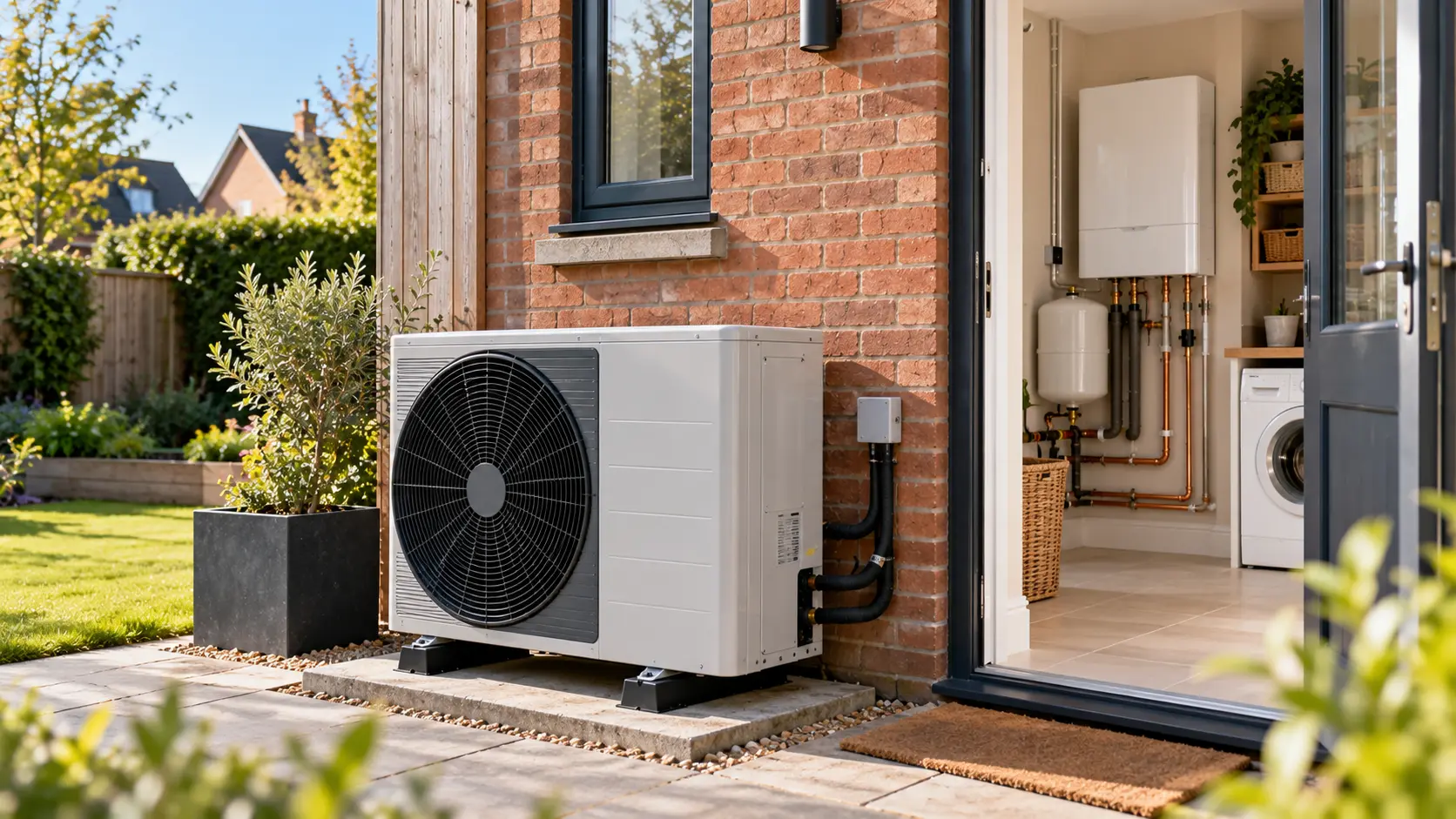
How each one works
Electric boiler: an electric element heats water, which is pumped round your radiators and, depending on the model, to a hot water cylinder or taps. There’s no combustion and no outdoor unit.
Air source heat pump: an outdoor unit extracts heat from the air, even in cold weather, and a compressor raises it to a useful temperature for your heating and hot water. It runs most efficiently at lower water temperatures over longer periods.
Side-by-side comparison
| Electric boiler | Air source heat pump | |
| Efficiency | Around 1 unit of heat per unit of electricity | Several units of heat per unit of electricity |
| Running costs | Higher | Usually lower in a suitable home |
| Installation cost | Lower | Higher |
| Outdoor unit | No | Yes |
| Hot water cylinder | Depends on model | Usually required |
| Radiator changes | Rarely | Sometimes, to suit lower temperatures |
| Grants | Not usually eligible for heat pump grants | May be eligible for the Boiler Upgrade Scheme |
| Disruption | Low | Moderate |
When a heat pump is the better choice
- The home is reasonably well insulated
- There’s space outside for the unit and inside for a cylinder
- You plan to stay in the home long enough to benefit from lower running costs
- You can take advantage of available grants
When an electric boiler makes more sense
- A flat or small home with low heat demand
- No suitable space for an outdoor unit
- A property where a heat pump would need extensive upgrades
- A simpler, lower-cost installation is the priority
For homes that want the convenience of electric heating with better use of off-peak tariffs, a heat battery like the tepeo ZEB is also worth looking at. See our electric boilers page for the options.
Running costs: what drives them
For both options, running costs depend on:
- Your electricity tariff, including off-peak and time-of-use rates
- Your home’s heat demand
- How the system is designed and controlled
- Whether you have solar panels
A heat pump’s efficiency depends heavily on good design, correct sizing and sensible flow temperatures. A poorly designed heat pump can cost more to run than expected. Good heating controls help either system run efficiently.
Grants and funding
In England and Wales, the Boiler Upgrade Scheme has offered grants towards heat pumps installed by MCS-certified installers. Electric boilers generally aren’t eligible. Grant amounts and rules can change, so check the current details on GOV.UK before planning around one.
Making the choice for homes in Surrey and South West London
Housing across Epsom, Kingston, Woking and Richmond ranges from flats and terraces to larger detached homes. Larger houses with gardens are often good candidates for heat pumps. Flats and homes with little outside space may find an electric boiler or heat battery more practical.
Frequently asked questions
Are heat pumps noisy?
Modern units are designed to be quiet, but the outdoor unit does make some noise when running. Positioning it thoughtfully, away from bedroom windows and neighbours, helps.
Can an electric boiler run a large house?
It can, but running costs rise with heat demand, and larger homes may need more power than a standard domestic supply can easily provide. An assessment will confirm what’s practical.
Can I switch from a gas boiler to either option?
Yes. Both connect to a wet heating system. A heat pump may need radiator upgrades and a cylinder; an electric boiler usually needs fewer changes.
Can’t decide which way to go?
Give us a ring on 020 8394 2776 or send us a message and we’ll come out, look at your home and help you weigh up the options.