



On a mild October afternoon your radiators don’t need to be as hot as they do on a freezing January night. That’s the idea behind weather compensation. So what is weather compensation? It’s a control that uses an outdoor sensor to adjust how hot your boiler or heat pump makes the water in your radiators, turning it down when it’s mild and up when it’s cold. It can make heating more comfortable and more efficient. Our heating controls page covers the controls we offer for homes in Surrey and South West London.
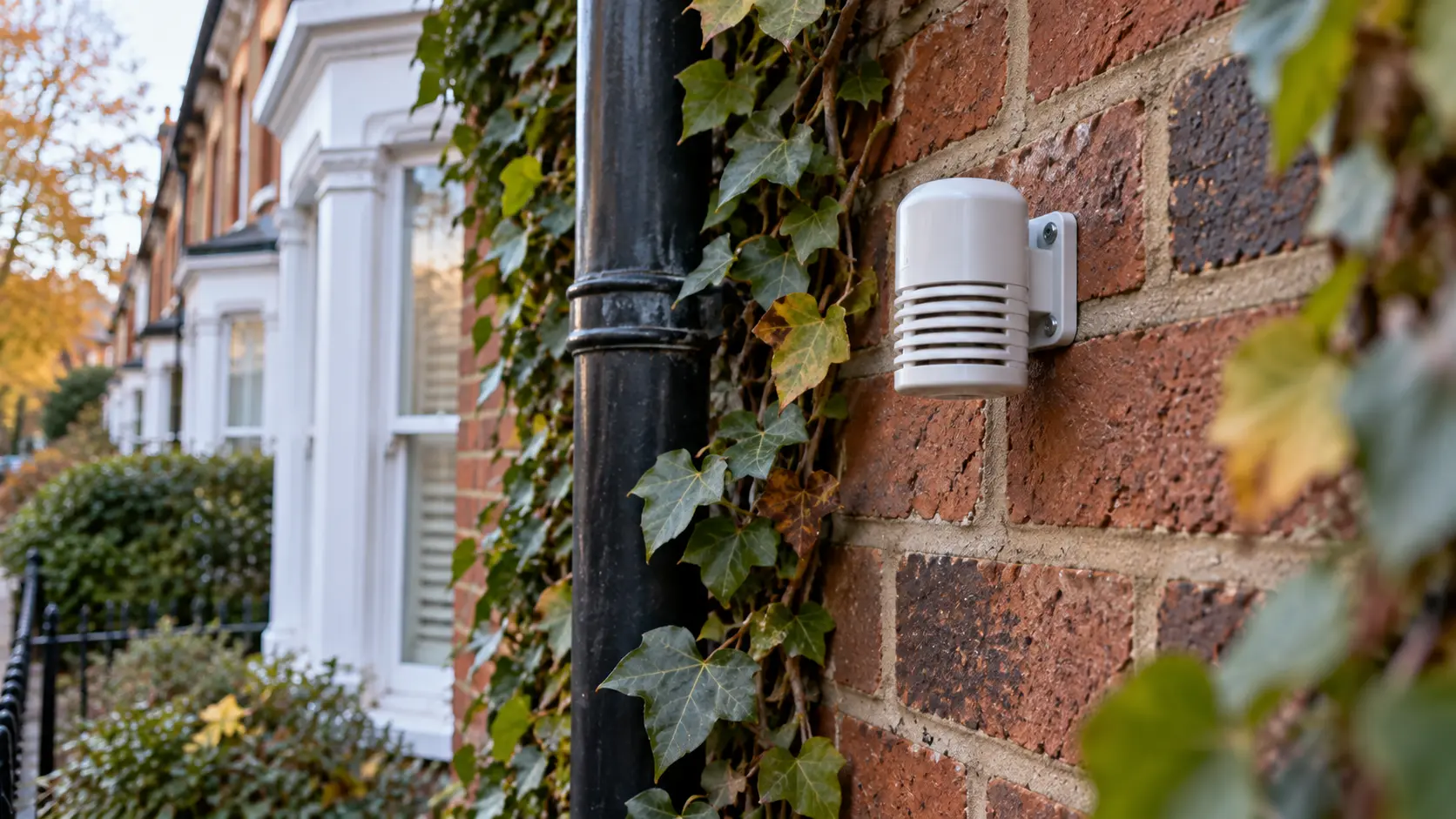
How weather compensation works
A small sensor is fitted on an outside wall, usually north-facing and out of direct sunlight. It tells the boiler or heat pump the outdoor temperature.
The controls then follow a setting, often called a heating curve, that links outdoor temperature to radiator water temperature. When it’s 12°C outside, the water might be quite cool. When it’s below freezing, it’s hotter. The heating runs more gently and for longer, instead of switching between flat out and off.
Why it can save energy
Condensing boilers are at their most efficient when the water returning to them is cool enough for them to condense. Running at lower temperatures for more of the year helps that happen.
For heat pumps, lower water temperatures are even more important. A heat pump’s efficiency drops as it’s asked to produce hotter water, so weather compensation is usually part of how a heat pump system is designed to run.
The size of any saving depends on your home, your system and how well the controls are set up. Anyone promising a fixed percentage without looking at your setup is guessing.
Weather compensation vs load compensation
They’re easy to confuse:
| Weather compensation | Load compensation | |
| What it measures | Outdoor temperature | Indoor temperature against the target |
| How it adjusts | Changes water temperature to suit the weather | Changes water temperature as rooms approach the set point |
| Extra hardware | Outdoor sensor | A compatible room thermostat |
Some systems use both. Either way, the aim is to avoid running the boiler hotter than it needs to be.
Does it work with my boiler?
Many modern boilers support weather compensation, either with the manufacturer’s own sensor or through compatible controls. Older boilers may not. It’s also worth knowing that in England, the Boiler Plus standards require gas combi boiler replacements to include an energy-saving measure, and weather compensation is one of the options.
If you’re having a new boiler, a heat pump or an electric boiler fitted, ask whether weather compensation is included and who will set it up.
Setting it up properly
Weather compensation only works well if the heating curve is right for the house. Set too low, rooms feel chilly on cold days. Set too high, you lose most of the benefit.
A good installer will:
- Choose a starting curve based on the home’s heat loss and radiator sizes
- Explain how long the heating will run, as it’s often longer and gentler than you’re used to
- Adjust the curve after the first cold spell if rooms aren’t comfortable
- Make sure the radiators are balanced, so heat reaches every room
Living with weather compensation
Radiators may feel warm rather than hot, especially in mild weather. That’s normal, and the room should still reach temperature. Large night-time setbacks can work against it, as the system has to recover from a big drop, so modest setbacks are usually better.
Weather compensation in Surrey and South West London homes
Homes around Epsom, Kingston, Worcester Park and Richmond include plenty of Victorian and Edwardian terraces alongside newer builds, with very different levels of insulation. That’s why one-size-fits-all settings rarely work. The curve that suits a well-insulated modern flat won’t suit a draughty period semi.
Frequently asked questions
Do I need a smart thermostat to have weather compensation?
Not necessarily. Many boilers and heat pumps use their own outdoor sensor and controls. Some smart thermostats offer a version of weather compensation using online weather data, but they must be compatible with your boiler to adjust its water temperature rather than just switching it on and off.
Will my house heat up more slowly?
On mild days, yes, as the water is cooler. The system is designed to run longer at lower temperatures rather than heat up quickly. If rooms aren’t getting warm enough on cold days, the heating curve probably needs adjusting rather than switching the feature off.
Can weather compensation be added to an existing boiler?
Often, if the boiler supports it. It may need the manufacturer’s outdoor sensor or a compatible control. Some older boilers can’t use it at all. An engineer can check your model and tell you what’s possible before you buy anything.
Want your heating controls checked?
If you’d like to know whether weather compensation would suit your system, give us a call on 020 8394 2776 or drop us a message and we’ll look at your setup and talk you through the options.