



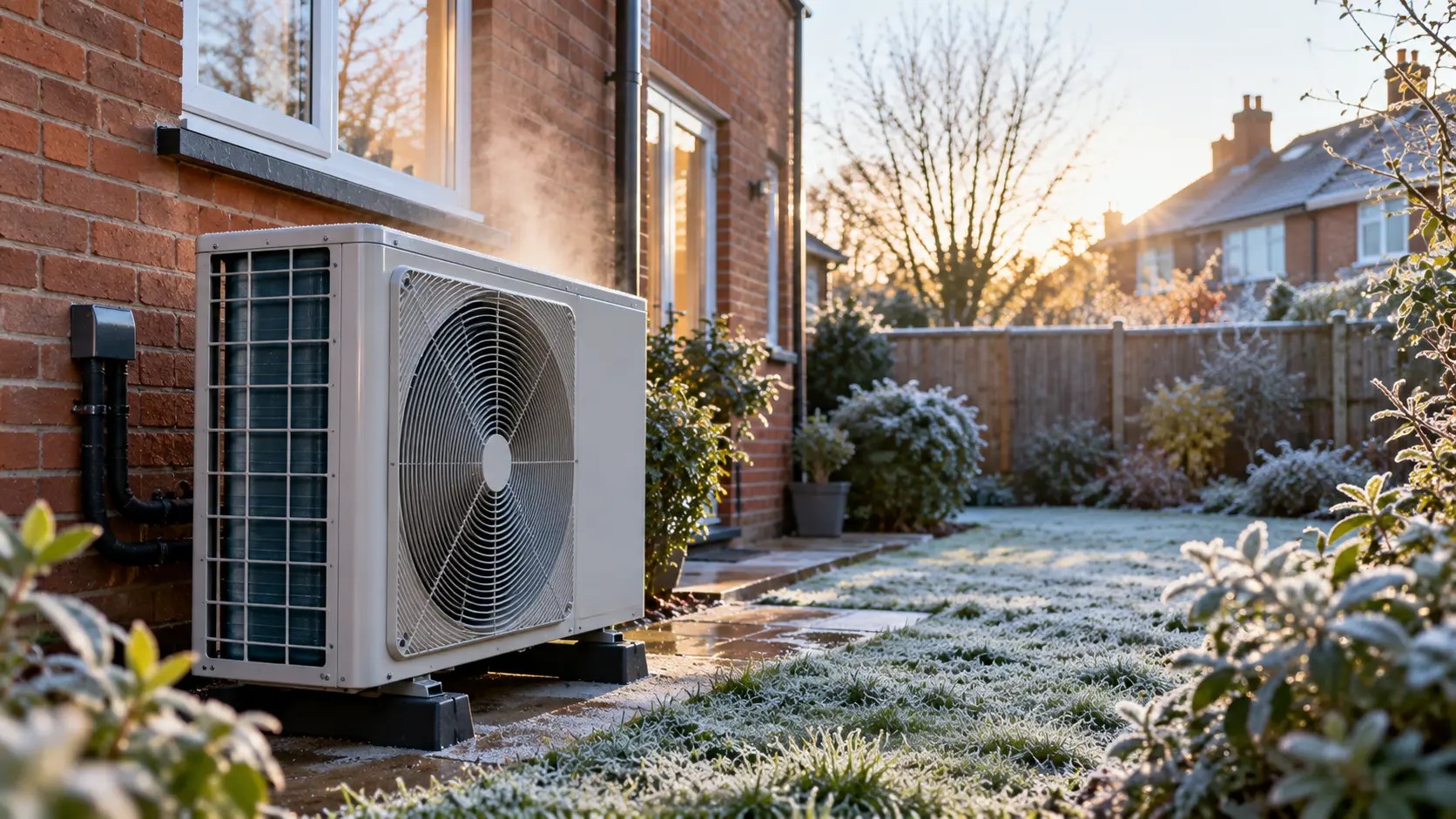
The first frosty mornings are a new experience if this is your first winter with a heat pump. Running a heat pump in winter feels different to a gas boiler: it runs for longer at lower temperatures, it may puff out steam, and it occasionally pauses to defrost. All of that is normal. What isn’t normal is cold rooms, ice building up on the unit or frequent error codes. Our heat pumps page explains how we assess homes across Surrey and South West London.
Why it runs for so long
A gas boiler blasts out high-temperature heat in short bursts. A heat pump works best producing lower-temperature water steadily over long periods. That’s how it stays efficient.
So if your heat pump seems to be running most of the day in cold weather, that’s usually by design. Turning it off and on again, the way many people use a boiler, often makes it work harder to catch up and can cost more.
Defrost cycles
When it’s cold and damp outside, moisture in the air freezes onto the outdoor unit’s coil. To clear it, the heat pump briefly reverses its cycle to warm the coil and melt the ice. During a defrost:
- The fan may stop
- You might hear a hiss or a change in sound
- Water drips from beneath the unit
- The heating output pauses for a few minutes
That’s all expected. Defrosts are usually more frequent around freezing point in damp weather than in very cold, dry conditions.
Steam from the outdoor unit
Seeing clouds of vapour from the unit can be alarming, but it’s normally just water vapour from the defrost cycle meeting cold air. It isn’t smoke and it isn’t harmful.
Settings that help in winter
Leave the thermostat steady
Pick a comfortable temperature and leave it. Large setbacks at night or while you’re out tend to force the heat pump to work harder when it restarts.
Let weather compensation do its job
Most heat pumps adjust the water temperature automatically depending on the outdoor temperature. That’s called weather compensation. If it’s been set up correctly, you shouldn’t need to change it much. Our heating controls page explains more about getting controls right.
Keep radiators clear
Heat pumps send cooler water to radiators, so anything that blocks heat output, such as furniture, long curtains or radiator covers, has more effect than it would with a boiler.
Keep TRVs open in main rooms
Heat pump systems are usually designed with most radiator valves open. Turning lots of them down can upset the balance of the system.
Looking after the outdoor unit
- Keep leaves, snow and debris away from the unit and its grilles
- Don’t cover it or build anything tight around it
- Make sure defrost water can drain away and isn’t freezing into a sheet of ice underneath
- Don’t chip ice off the coil, as the fins are easily damaged
Anything inside the unit, or involving refrigerant, needs a suitably qualified engineer.
Signs something needs checking
Contact your installer if:
- Rooms aren’t reaching temperature even after the system has run for a long time
- Thick ice is building up on the unit and not clearing
- The unit is showing repeated error codes
- There’s a sudden jump in electricity use without a change in the weather
- You hear grinding, rattling or loud banging
Heat pumps in Surrey and South West London homes
Homes around Epsom, Kingston, Worcester Park and Richmond range from compact terraces to larger detached houses. Outdoor units here are often tucked down side returns or in small gardens, where leaves and debris collect against them in autumn. A quick clear-out before winter helps the unit breathe and defrost properly.
Frequently asked questions
Will my heat pump keep the house warm in a cold snap?
A correctly sized and designed heat pump should keep the house warm through typical UK winters, including cold spells. Efficiency drops as it gets colder, which is why the heat loss calculation at design stage matters. If rooms are cold, the settings or design may need reviewing.
Should I turn my heat pump off at night?
Usually not. Heat pumps tend to work best with steady temperatures. A small setback of a degree or two overnight is fine for many systems, but switching off completely often means more work and higher costs in the morning. Your installer can advise for your setup.
Is it normal for my heat pump to make noise in winter?
Some extra sound is normal, especially during defrosts when the fan stops and the unit hisses or clicks. Persistent grinding, rattling or banging is not normal and should be checked by an engineer, as it may point to a mechanical or mounting problem.
Not sure your heat pump’s set up right?
If your heat pump isn’t keeping up or you’d like the settings checked before winter really bites, give us a call on 020 8394 2776 or drop us a message and we’ll come and take a look.